Architecture of Puerto Escondido: Chukum, Wabi-Sabi and Palapa
What chukum is, why it dominates the architecture of Puerto Escondido, and how the materials of a beach house affect its maintenance and rental value.
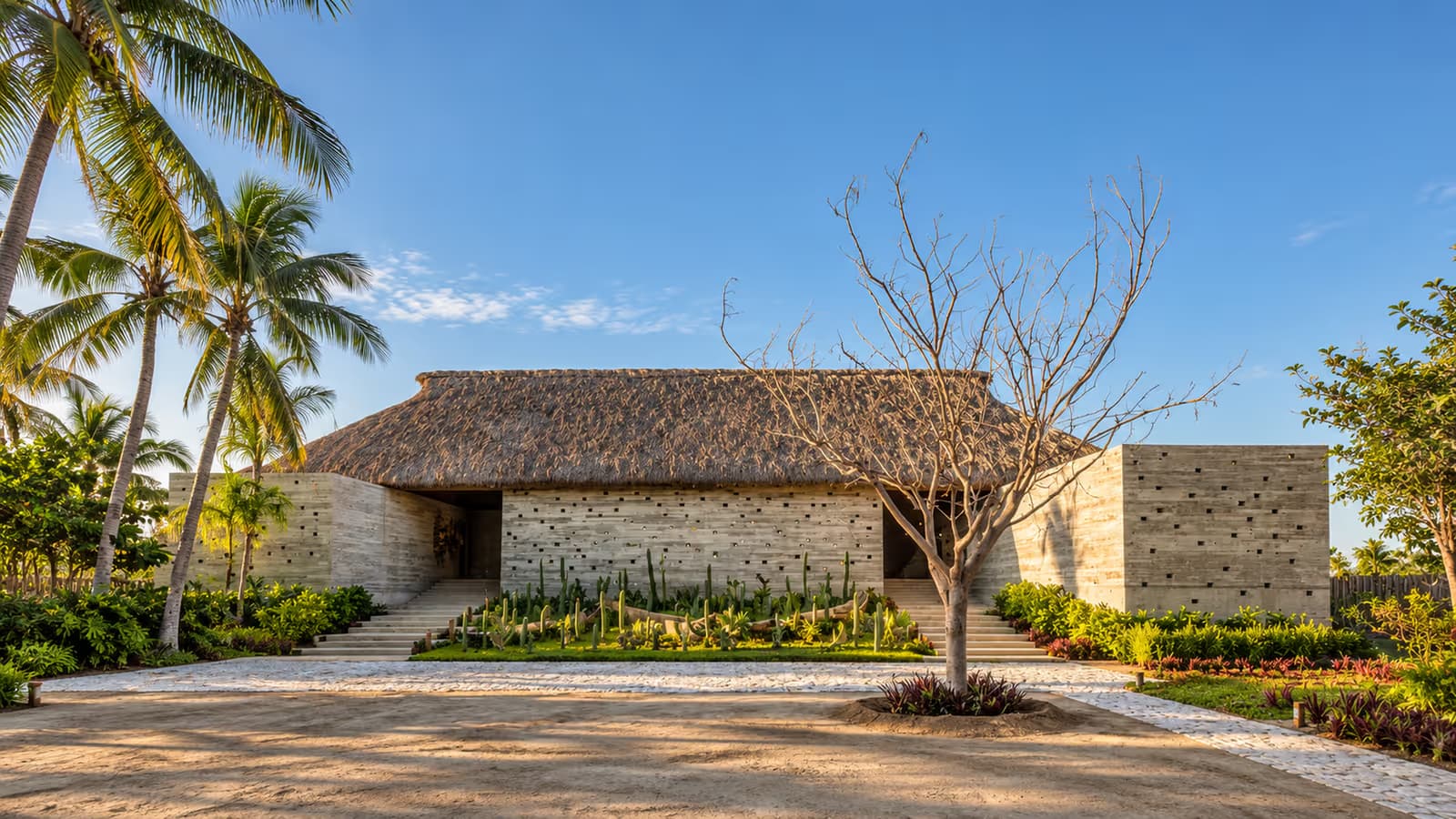
If you have been in Puerto Escondido for more than two days you have already noticed that the new houses look alike. Not in the floor plan or size, but in the finish: walls of a warm beige, unpainted, with a slightly irregular texture that absorbs light instead of reflecting it. Almost always there is unfinished wood and a palapa.
This finish has a name and comes from Yucatán. And besides looking good, it solves a very specific technical problem of building on the sea front.
What chukum is
Chukum is a natural coating obtained from the bark of the tree of the same name, Havardia albicans, a legume native to the Yucatán Peninsula that grows between four and ten meters and tolerates dry climate well.
The process is ancient and simple: part of the outer bark is cut— the tree is not felled, and the bark regenerates—, it is boiled in water to release natural tannins, strained, and the resulting extract is mixed with hydrated lime until it forms a paste that is applied like stucco.
The Maya already used it as a natural pigment for stuccos and architectural ornamentation. Contemporary use in hotels and houses on the Pacific coast is relatively recent, but the technique is centuries old.
Why it works on the coast
Three practical reasons, which explain why it became dominant.
- It is waterproof and resistant to wear. That is why it is used in pools, bathrooms and surfaces in contact with water. In a climate with rains from June to October and high humidity all year round, this is not just an aesthetic detail.
- It does not require paint or additional sealants. It maintains its appearance without coating. In a beach house, where salt spray eats conventional paint every two or three years, this completely changes the maintenance budget.
- The color is in the mass, not on top. Depending on the proportion of the mixture, it ranges from pinkish beige to light coffee and terracotta. It does not peel, because there is no layer that can detach: the color is the material.
Added to that is something less measurable: it ages well. A chukum wall after five years does not look deteriorated, it looks settled. And that is where the other half of the conversation comes in.
Wabi-sabi and why it matters commercially
Wabi-sabi is a Japanese aesthetic sensibility that finds beauty in the imperfect, the incomplete and what shows the passage of time. A wall with irregular texture, wood with visible grain, ironwork that rusts a little, unpolished stone.
In Puerto Escondido it was adopted strongly, and not by chance. It is the only aesthetic in which the wear of an aggressive climate works in favor of the property instead of against it.
Think of it from the owner's perspective. A pristine white minimalist house on the coast needs constant maintenance to keep looking like the day it was delivered: every moisture stain, every salt mark, every crack is noticeable. The same house in chukum, wood and stone absorbs three years of climate without anyone reading it as neglect.
For a vacation-rental property this translates into money. The house photographs just as well in its third year as in its first, and the annual budget for paint and repairs is a fraction. We break it down in how much it costs to maintain a property per year.
The vocabulary of coastal materials
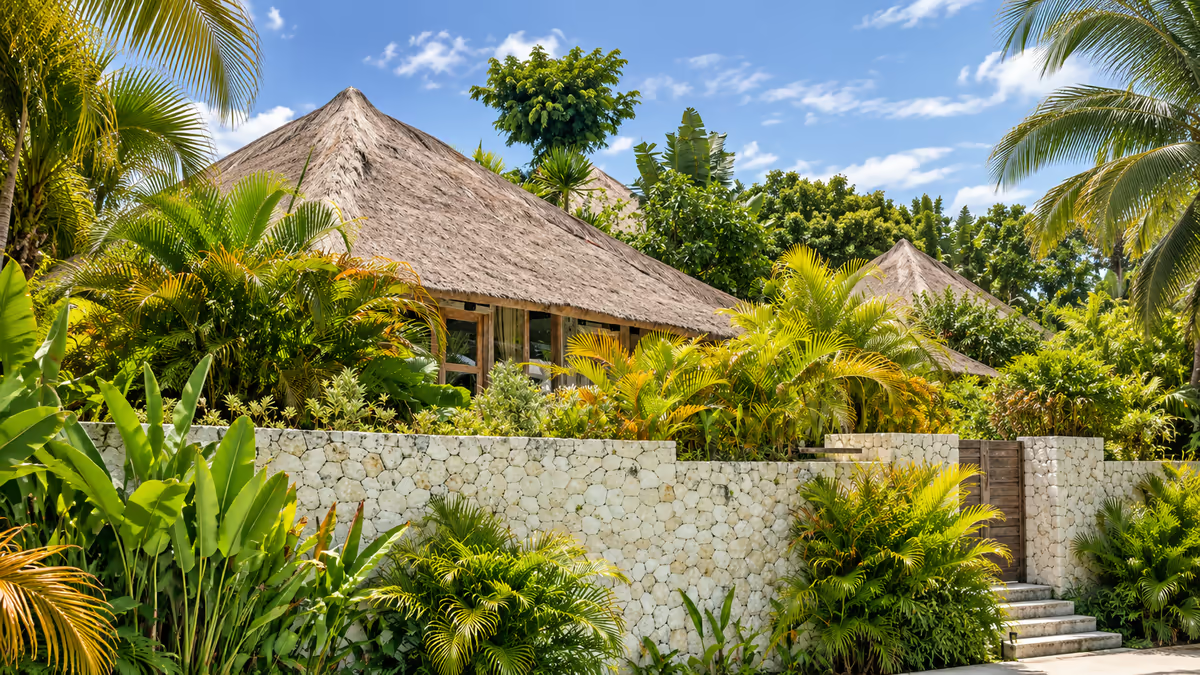
If you are looking at properties, these are the terms you will find in the listings and what they mean for your pocket.
| Material | What it is | What it means for you |
|---|---|---|
| Chukum | Lime stucco with bark extract | Water-proof, no paint, color in the mass. Higher initial cost, much lower maintenance |
| Palapa | Palm roof on a wooden structure | Cool and beautiful. Requires palm replacement every 8–15 years depending on quality and exposure |
| Concreto aparente | Exposed concrete slab and wall | Very durable if the steel reinforcement coating is correct. If not, salt-peter shows up in a few years |
| Parota / macuil | Regional hardwoods | Resist the climate well. Ask if it is certified and how it was treated |
| Barro / piso de barro | Hand-made ceramic tile | Cool underfoot, aesthetic, porous. Needs periodic sealer |
| Herrería de acero al carbón | Common railings and balustrades | The weak point near the sea. Close to the beach, use stainless or anodized aluminum |
The one-line question you must ask on every visit
"What is the railing and hardware made of?" One hundred meters from the sea, carbon steel starts to corrode in two or three years. It is the item most often cut back in construction and the one that ends up costing the most later.
Not all chukum is chukum
A useful warning. As the finish became desirable, imitations appeared: tinted mortars and acrylic stuccos that look like chukum but are something else, with different behavior against water and a different service life.
There is no seal that guarantees it, so the questions are: who applied it and with what product? Is it lime-based or acrylic? Does it have a warranty? A true chukum applicator answers without hesitation and usually has photos of projects from years ago.
And if you are budgeting new construction, the finish enters the cost decision from the start: how much it costs to build in Puerto Escondido explains how the price per square meter moves when you raise the level of finishes.
Where it looks best
Coastal architecture is not distributed evenly. In La Punta Zicatela the small, artisanal and natural-material style dominates: palapa, wood, chukum, a lot of design per square meter. In Bacocho y Rinconada there is more consolidated residential construction from the nineties and two-thousands, where chukum appears in remodels. In Barra de Colotepec you find new large-lot projects, where the style shows more freedom.
If you want to compare zones before houses, best zones to invest in Puerto Escondido puts them side by side. And if you already want to see product, there are 43 houses for sale in Puerto Escondido in the catalog: filter by zone and you will immediately notice the difference in construction language between one and another.
Frequently Asked Questions
What is chukum and where does it come from?
It is a natural coating made with the extract of the bark of the chukum tree (Havardia albicans), native to the Yucatán Peninsula, boiled to release its tannins and mixed with hydrated lime. It is applied as stucco. The Maya used it as a pigment for stuccos and ornamentation.
Is chukum more expensive than paint?
Yes, initially, considerably more. After five or ten years the comparison reverses, because it does not require paint or sealant and does not peel. In a beach house, where exterior repainting is done every two or three years, chukum usually ends up cheaper over its useful life.
How long does a palapa last in Puerto Escondido?
Between eight and fifteen years depending on the quality of the palm, roof slope, treatment and exposure to wind and salt. Replacement is a predictable expense and must be budgeted; it is not a failure, it is scheduled maintenance.
Can chukum be applied over existing walls?
Yes, it is one of the most common renovations in the area. It requires preparing the surface and ensuring the wall is sound and free of rising moisture. On a wall with moisture problems, any finish will fail.
Which style rents best in Puerto Escondido?
The one that reads as authentic to the place. Properties with natural materials, good shade, cross-ventilation and usable outdoor spaces maintain higher rates than those that could be in any city. Profitability numbers by type are in vacation rental ROI in Puerto Escondido.
Your next property in Puerto Escondido
Homes, land and condos, legally verified, with bilingual guidance from start to finish.
View all properties