
Will Puerto Escondido Be the Next Tulum? The Real Data
Water, land and mass tourism: the real limits on Puerto Escondido's growth and what they mean if you're buying property here.
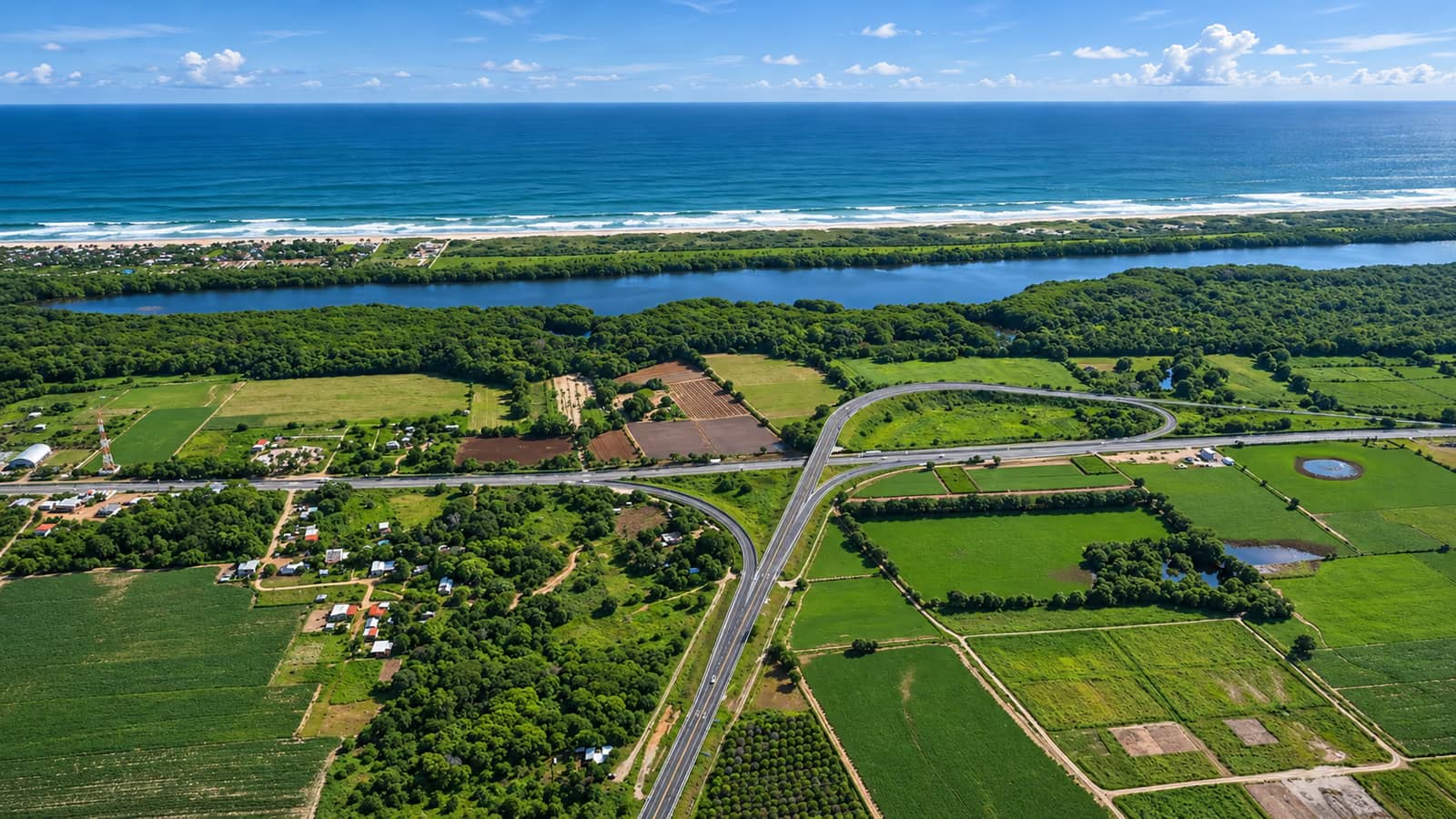
It's the after-dinner conversation all over Puerto Escondido, and also the question half of our buyers ask us: if this grows the way Tulum grew, am I buying before the boom or before the problem?
Let's answer it with data and without hype, because both easy answers are bad. The "this is going to multiply" answer ignores real physical limits. The "this is going to get ruined" answer ignores that the destination has been growing for three years and it hasn't happened.
What has already changed, in numbers
The Barranca Larga–Ventanilla highway is the turning point. 104.2 kilometers, opened in February 2024, more than 8,200 million pesos of investment and almost fifteen years of construction. The drive from Oaxaca City went from more than six hours to just under three.
The effect was immediate and measurable: since it opened, bookings have grown 27% among domestic travelers and 40.7% among Americans.
Add to that the airport expansion, scheduled for the end of 2026, which we cover in the 4,500 million peso airport.
Two access routes improving at the same time is, literally, what happened to Tulum fifteen years ago.
But there are two brakes here that Tulum didn't have
The first: water
This is the hard fact of the matter. Puerto Escondido's water and sewer infrastructure was built thirty or forty years ago for a population of about 10,000 residents. The metro area today is around 35,000 permanent residents, not counting tourists.
The consequences were already visible in 2026, and they aren't abstract:
- In April, the storm drainage system at Bahía Principal collapsed after heavy rains
- In July, Playa Principal was temporarily classified as unfit for recreational use, and reclassified after new sampling
- In July, the State Water Commission acknowledged that the water and sanitation infrastructure is overwhelmed
- A civil association filed an amparo (constitutional injunction) against wastewater discharges, which a federal court admitted
This isn't an environmental footnote: it's a physical limit on how many more units the established urban area can absorb. What's being done about it —and which areas benefit— we break down in the 64 million in water and the ten treatment plants.
The second: land
A good part of the land around Puerto Escondido is under communal ownership —areas like Bajos de Chila, Palmarito and Agua Dulce—. Economist Leonardo González described it with a phrase worth remembering: it's a "de facto supply restriction".
Translated: not all the land you see on the map is land that can be bought, deeded and developed tomorrow. That friction slows the pace of mass development, and it has a side effect worth understanding: it raises the value of what is properly deeded.
That's why we insist so much on document verification. The details are in how to verify a lot before making an offer.
So, which scenario is realistic?
Neither Tulum's nor that of a town that stays the same. What the data suggests is growth that is slower, more expensive and more concentrated.
Slower, because water and land tenure set a ceiling that money doesn't unlock quickly.
More expensive, because demand is in fact growing at the pace of a new highway and an expanded airport, while developable supply grows at the pace of water infrastructure. Restricted supply with growing demand has only one outcome.
More concentrated, because the areas that already have services in place will absorb most of the growth, and the ones that don't will take longer than their brochures promise.
The takeaway for buyers
The useful question isn't "is this going to be Tulum?" but "is this specific property on the right side of the limit?". And that gets answered with three concrete facts: whether it has reliable, verifiable water, whether it's deeded, and whether it's in an area with established infrastructure or one still expanding. Everything else is after-dinner conversation.
What we're not going to tell you
We're not going to tell you that everything goes up. There are lots in Puerto Escondido that have been listed for years and haven't moved, and there are areas where the lack of services will keep weighing far more than the price reflects.
Nor are we going to give you a ten-year appreciation projection down to the decimal. When you see one, ask where the number came from. Projections of 18% to 25% a year circulate in the local market without a single source behind them, almost always in dollars and almost always published by whoever wants to sell to you.
What we can do is show you the inventory with the paperwork reviewed and the data that can actually be verified: houses, apartments and land.
Frequently Asked Questions
Is Puerto Escondido going to get saturated like Tulum?
It's less likely, and the reason is physical, not a matter of will: the water infrastructure is overwhelmed and a good part of the surrounding land is socially owned, which an economist in the sector described as a de facto supply restriction. Those two brakes didn't exist in Tulum with the same force.
Is there a water problem in Puerto Escondido?
Yes, and it's officially acknowledged: in July 2026 the State Water Commission admitted that the water and sanitation infrastructure is overwhelmed. There is investment underway to fix it. For buyers, the practical consequence is to verify the water situation of each property, not of the destination in general.
Is it better to buy now or wait?
It depends on the property, not the destination. In areas with services in place and paperwork in order, the supply restriction works in favor of whoever has already bought. In areas without services, waiting does no good if what's missing isn't on a construction schedule.
Are prices going to keep rising?
The combination of growing demand and restricted developable supply pushes prices up, but not evenly. What rises is what's well located, deeded and has services. A lot with no access or water doesn't appreciate just because the destination is trendy.
Which areas have the healthiest growth?
The ones that already have an established water network, sewer system and roads absorb growth without friction. Expansion areas offer a better entry price in exchange for sorting out services. The comparison is in the best areas to invest in Puerto Escondido.

Your next property in Puerto Escondido
Homes, land and condos, legally verified, with bilingual guidance from start to finish.
View all properties